
The Billion-Dollar Feng Shui War in Hong Kong and the Business Lesson Behind It
A hidden story behind Hong Kong’s skyline shows how HSBC, Bank of China, and Standard Chartered used positioning, perception, and strategy. A practical lesson for travel businesses and financial decision-makers.
ANTRAVIA NEWS
12/14/20255 min read
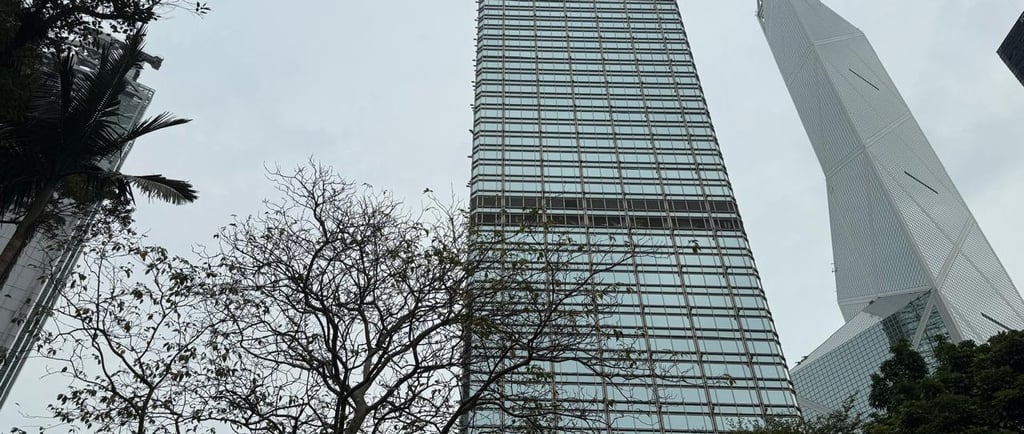

The Billion-Dollar Feng Shui War Hidden in Hong Kong’s Skyline
If you stand in Statue Square in Central, Hong Kong, and look up, you are not just looking at two famous skyscrapers. You are looking at one of the longest and most expensive non-financial battles in modern banking history. A battle fought not with lawsuits or takeovers, but with architecture, symbolism, and feng shui.
On one side stands the HSBC Main Building, completed in 1985 and designed by Norman Foster. It is open, industrial, and unapologetically modern, with exposed steel and escalators that famously bypass the ground floor. Directly across from it rises the Bank of China Tower, completed in 1990 and designed by I.M. Pei. Its sharp triangular geometry cuts into the skyline like a crystal blade.
To most visitors, they are simply two striking buildings. To locals, especially in finance, they represent a 35-year feng shui standoff that has quietly cost hundreds of millions of Hong Kong dollars.
When the Bank of China Tower opened, its aggressive angles and X-shaped structural lines caused immediate concern. In classical feng shui, sharp edges aimed at another building are considered destructive energy. The tower appeared to point directly at HSBC’s headquarters and nearby government buildings. Inside HSBC, anxiety spread quickly. Staff talked. Rumours followed. Senior management called in feng shui masters.
The response was subtle but deliberate. In the early 1990s, two crane-like structures on HSBC’s rooftop were repositioned and repainted. Officially, they were maintenance units. Unofficially, everyone in Hong Kong knew what they were. Cannons. Angled directly back at the Bank of China Tower, they were seen as a symbolic return of the negative energy.
The escalation did not stop there. Bank of China responded by installing water features designed to counteract the fire symbolism of the cannons. Water, in feng shui, extinguishes fire. Later, after pressure even from Beijing, the tower’s sharp peaks were softened with decorative elements known as ruyi, traditional auspicious symbols intended to neutralise aggression. The cost of these changes was rumoured to be enormous.
HSBC, for its part, reinforced its defences. The famous bronze lions at ground level were polished daily by staff for luck. The building’s design, raised on stilts with escalators skipping the ground floor, followed traditional feng shui principles that discourage negative forces. During a major renovation in the 2010s, more subtle features were added, including a rooftop garden and protective glass cladding facing Bank of China.
After decades of architectural manoeuvring, who won?
Ask any feng shui master and you will get a different answer. HSBC supporters point to stability and strong performance. Bank of China supporters say the water and ruyi neutralised everything. But most locals will smile and point to a third building that almost no one talks about.
The real winner sits quietly between them. The Standard Chartered Bank building.
Perfectly shaped, with rounded edges and a calm rectangular form, it avoids all the aggressive lines aimed at the other two. It faces Victoria Harbour, drawing in water energy associated with cash flow, while being backed by Government Hill, symbolising stability and support. Its mirrored façade reflects the chaos around it, turning conflict into benefit.
During renovations in the early 2000s, subtle changes were made. The entrance angle was adjusted. An indoor waterfall was added. Large crystal features were quietly placed in the lobby. While HSBC and Bank of China spent fortunes countering each other, Standard Chartered positioned itself to absorb the spillover.
There is a saying in Hong Kong that translates loosely to this. When two giants fight, the quiet one in the middle drinks the soup.
The lesson goes far beyond feng shui. In business, the biggest advantages often come not from confrontation, but from structure, positioning, and understanding the environment you operate in. And in Hong Kong, even the skyline knows it.
What this means for Hotels
Hotels face the same strategic choice that played out in Central Hong Kong. Many respond to pressure by discounting rooms, adding costly amenities, or reacting to OTAs and competitors in ways that erode long-term profitability. The hotels that perform best tend to focus instead on positioning. How the property is priced, how demand is managed across channels, how cash flow is protected during low seasons, and how fixed costs are structured often matters more than constant tactical responses. Like Standard Chartered in the middle of two giants, hotels that understand their market position and design their financial model around it are often the ones that quietly outperform, even in difficult trading conditions.
What this means for Travel Agents and Tour Operators
Travel agents and tour operators often feel pressure to compete by doing more. More inclusions, more discounts, more marketing spend, more supplier negotiations. The instinct is to fight harder when margins tighten. But the lesson from Hong Kong’s skyline is that positioning usually matters more than constant reaction.
Agents who perform best tend to design their business model deliberately. They decide where they sit in the value chain, when to act as an intermediary and when to act as principal, how they price their expertise, and how they protect cash flow. Tour operators that understand their cost structure, payment timing, and exposure to refunds and chargebacks are often more resilient than those chasing volume at any cost.
There is also a clear lesson in monetization. Knowledge, context, and storytelling can be sold. Agents who understand destinations deeply, whether through cultural insight, financial awareness, or operational expertise, can create differentiated products that justify higher fees. This reduces reliance on commissions and price competition and shifts the conversation from cost to value.
In practical terms, this means building a business that does not rely solely on reacting to supplier terms, OTA pressure, or short-term demand swings. Instead, it means designing systems, pricing, and financial controls that quietly absorb shocks and allow the business to grow without constant firefighting. Like the building that sits calmly between two giants, the strongest travel businesses are often the ones that choose their position carefully and let others fight around them.
The real final Finance lesson behind the Story
Strip away the feng shui language, and this is a textbook lesson in financial strategy.
HSBC and Bank of China invested heavily in defensive measures to protect confidence, reputation, and perception. These were not superstitions to them. They were risk controls aimed at staff morale, investor sentiment, and public confidence.
Standard Chartered, meanwhile, focused on positioning rather than reaction. It avoided conflict, reduced exposure, and quietly optimised its environment. Lower cost. Lower noise. Better outcome.
For travel businesses, the parallel is clear.
Not every problem is solved by fighting harder, adding more products, or undercutting competitors. Often the smarter move is structural. How you price, how you position your offering, how you manage cash flow, and where you sit in the value chain matters more than scale.
This is the difference between reacting to pressure and designing resilience into the business from the start.
It is the same principle whether you are designing a skyscraper, a tour product, or a financial model. Sometimes, the quietest strategy is the most profitable one.
Disclaimer:
Content published by Antravia is provided for informational purposes only and reflects research, industry analysis, and our professional perspective. It does not constitute legal, tax, or accounting advice. Regulations vary by jurisdiction, and individual circumstances differ. Readers should seek advice from a qualified professional before making decisions that could affect their business.
See also our Disclaimer page
Antravia,
Travel Finance
Where Travel Meets Smart Finance
Email:
Contact us:
Antravia Advisory
© 2025. All rights reserved. | Disclaimer | Privacy Policy | Terms of Use | Accessibility Statement
Antravia.com - Global site of the Antravia Group.
Antravia.com | Antravia.co.uk | Antravia.ae |
Finance.travel | Tax.travel | Consultancy.travel | VAT.travel | VAT.claims |
USSales.tax | EuroVAT.tax | UKVAT.tax |
contact@antravia.com
941 W Morse Blvd suite 100
Winter Park
Florida
32789